

Challenge Library Guide: Primary Sources
What is a primary source?
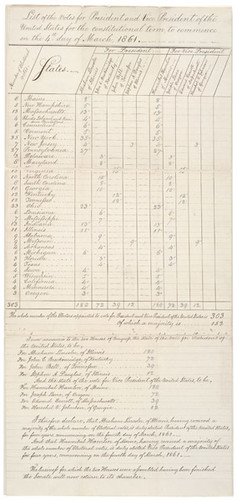 Primary sources enable the historical researcher to get as close as possible to what actually happened during an historical event or time period. A primary source reflects the individual viewpoint of a participant or observer. Here are some examples of primary sources:
- Items that describe events where the author is a participant or observer, such as diaries, letters, memos, journals, speeches, and interviews. Example: Diary of Charles Rumley from St. Louis to Portland, 1862
- Photographs, audio and video recordings, and other electronic records that record an event. Example: Oregon Politics Radio Disc Collection [sound recording], 1938-1958
- Records collected by government agencies such as birth and death records, marriage records, voting tallies, land deeds, and census data. Example: 15th census, population, 1930. Oregon
- Records created by organizations or agencies, such as reports, minutes of meetings, and bylaws. Example: The dawn of British trade to the East Indies as recorded in the Court Minutes of the East India Company, 1599-1603
- Memoirs and autobiographies. Example: Autobiography of Samuel L. Campbell, 1824-1902 : frontiersman and Oregon pioneer : together with his summary of the Whitman Massacre.
- Material published at the time of an event, such as books, newspapers and magazine and journal articles. These are distinguished from secondary sources because they are contemporary. Example: Jones, W. F. D. "An Oregonian Poet Hermit." Overland Monthly and Out West Magazine, V. 25, issue 148, April 1895, pp. 75-378.
- Data collected by researchers, such as field notes, results of experiments, and measurements. Example: Climatological data. Oregon.
Image credit: Electoral Vote Tally for the 1860 Presidential Election, 1861 (page 1 of 3) by The U.S. National Archives, via Flickr
Primary Sources in Library Databases
The Library has many many full-text databases of electronic primary sources. Here are some collections to explore.
-
American West This link opens in a new windowContains manuscripts, books, maps, photos, and other materials focusing on the American West.
-
British Pathe This link opens in a new windowConsists of the archive of the British Pathe news corporation from 1896 to 1970. The archive covers history, social history, sports, news, and entertainment. Closed captions are not available.
-
China: Trade, Politics and Culture 1793-1980 This link opens in a new windowPresents periodicals, diaries, photographs, and other materials relating to British and American diplomats, missionaries, business people, and tourists in China.
-
Civil Rights in America: From Reconstruction to the Great Society This link opens in a new windowProvides an archive of official publications and primary source material related to civil rights in the United States.
-
Confidential Print: Middle East This link opens in a new windowProvides the full text of historical reports, dispatches, correspondence, and other documents issued by the British Foreign and Colonial Offices on the Middle East and northeast Africa from circa 1820 to 1970.
-
Early American Newspapers I, II, and III This link opens in a new windowCovers early American newspapers, a major primary source for American history. Provides unprecedented access to the nation's newspapers from 1690 to 1876. Series I covers 1690-1876, while series II and III cover 1821-1876.
-
Early English Books Online (EEBO) This link opens in a new windowOffers full text digital facsimiles of titles from the earliest printed works in the English language.
-
Empire Online This link opens in a new windowFind primary source documents on colonial history, politics, and culture from 1492 to 2007, primarily about the British Empire, especially Africa, the Americas, Australia, Oceania, and South Asia.
-
Making of the Modern World This link opens in a new windowArchives books or monographs on economics and business published from 1450 through 1850. Includes materials on commerce, finance, social conditions, politics, trade, and transport.
-
Medieval Travel Writing This link opens in a new windowFeatures digitized medieval manuscripts of important European travel writing from the later Medieval period, focusing on travels from Europe to the Holy Land, India, and China. Includes travel maps.
-
New York Times Historical File This link opens in a new windowArchives the New York Times from 1851 with full page images and articles.
-
Slavery, Abolition and Social Justice This link opens in a new windowArchives primary source documents for the study of slavery and abolition with materials from Africa, the Caribbean, the U.S., Latin America, and Europe from 1490 to 2007.
-
Times of London Digital Archive This link opens in a new windowArchives the full text of The Times of London from 1785 to 1985.
-
Women and Social Movements in the United States, 1600-2000, Scholar's Edition This link opens in a new windowMaintains primary source documents and historical interpretations focusing on women in American social movements.


Primary Sources on the Web
Many libraries, museums, and archives have digitized their historic documents and put them online in digital libraries. Here are some large collections (and links to other large collections) you may want to explore.
-
American Memory Project from the Library of CongressAmerican Memory provides free and open access through the Internet to written and spoken words, sound recordings, still and moving images, prints, maps, and sheet music that document the American experience.
-
Chronicling America: Historic American NewspapersDigitized historic American newspapers pages from 1836-1922.
-
Digital ScriptoriumA growing image database of medieval and renaissance manuscripts.
-
EuroDocsAn extensive list, by country, of websites with European primary historical documents that are transcribed, reproduced in facsimile, or translated.
-
Flickr Commons This link opens in a new windowOffers public domain photographs and other photographs from national and international libraries, museums, archives, and cultural institutions.
-
National Union Catalog of Manuscript CollectionsThe mission of the NUCMC program is to provide and promote bibliographic access to the nation's documentary heritage.
-
Slavery in America and the World: History, Culture & LawThis collection brings together all known legal materials on slavery in the United States and the English-speaking world and includes pamphlets, books, legal statutes, and articles on slavery.
-
Trans-Atlantic Slave Trade DatabaseProvides information on slaving voyages from Europe and Africa to North America, the Caribbean, and Brazil. The database offers researchers, students, and the general public a chance to rediscover the reality of one of the largest forced movements of peoples in world history.
-
World Digital LibrarySignificant primary materials from countries and cultures around the world. Browse by time, place, topic, type of item, and more.